
Beliefs of Islam: Understanding the Core Faith of Muslims
Islam is one of the fastest-growing religions in the world and is followed by billions of people across different countries and cultures. The word “Islam” means submission to the will of Allah (God), and its followers are known as Muslims. The foundation of Islam is built upon strong spiritual beliefs that guide Muslims in every aspect of life.
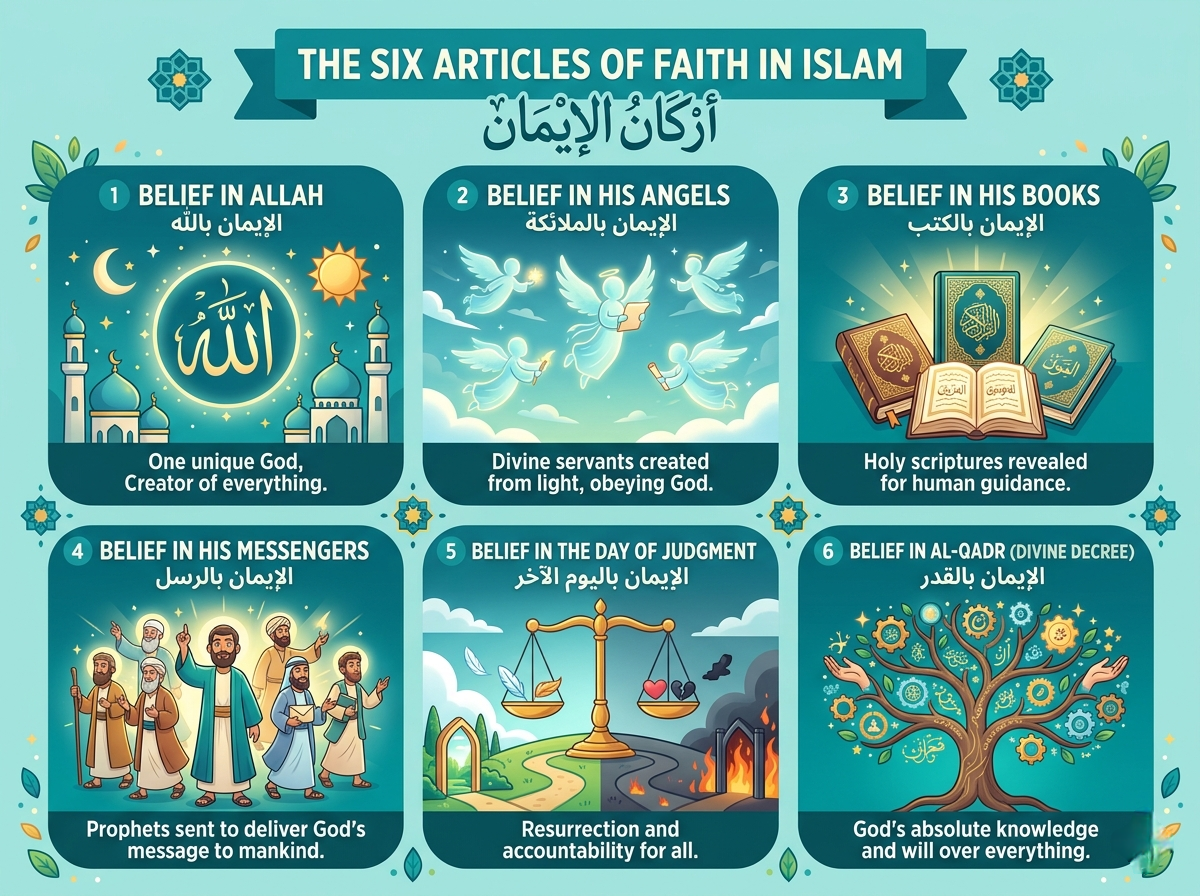
The beliefs of Islam are based on faith in Allah, His angels, His books, His prophets, the Day of Judgment, and divine destiny. These are commonly known as the Six Articles of Faith in Islam. Understanding these beliefs helps people learn about Islamic teachings, values, and the peaceful message of Islam.
In this blog, we will explore the core beliefs of Islam, their importance, and how they influence the daily lives of Muslims.
1. Belief in Allah (God)
The most important belief in Islam is faith in Allah, the One and Only God. Muslims believe that Allah is the Creator of the universe, all-powerful, merciful, and eternal. He has no partners, children, or equals.
Islam teaches pure monotheism, known as Tawheed, which means believing in the oneness of Allah.
Key Beliefs About Allah
- Allah is the Creator of everything
- He is All-Knowing and All-Powerful
- He is Most Merciful and Forgiving
- Nothing is comparable to Him
Muslims worship Allah alone and seek guidance, forgiveness, and help from Him in all matters of life.
2. Belief in Angels
Muslims believe in the existence of angels, who are created by Allah from light. Angels are obedient servants of Allah and carry out His commands without disobedience.
Unlike humans, angels do not eat, sleep, or commit sins.
Important Angels in Islam
- Jibreel (Gabriel) – Delivered revelation to prophets
- Mikail (Michael) – Responsible for rain and sustenance
- Israfeel – Will blow the trumpet on the Day of Judgment
- Malik-ul-Maut – The Angel of Death
Muslims believe that angels also record people’s good and bad deeds.
3. Belief in the Holy Books
Islam teaches that Allah revealed divine books to guide humanity. Muslims believe in all the holy scriptures sent before the Quran.
Holy Books in Islam
- Torah revealed to Prophet Musa (Moses)
- Psalms revealed to Prophet Dawood (David)
- Gospel revealed to Prophet Isa (Jesus)
- Quran revealed to Prophet Muhammad (PBUH)
The Quran is the final and complete revelation from Allah. Muslims believe it has remained unchanged and serves as guidance for all mankind.
Importance of the Quran
- Provides moral and spiritual guidance
- Teaches justice, kindness, and honesty
- Explains the purpose of life
- Strengthens faith and character
The Quran is central to Islamic belief and daily worship.
4. Belief in Prophets of Allah
Muslims believe that Allah sent prophets to guide people toward truth and righteousness. From Prophet Adam to Prophet Muhammad (peace be upon them all), every prophet taught the message of worshipping one God.
Some Important Prophets in Islam
- Prophet Adam
- Prophet Nuh (Noah)
- Prophet Ibrahim (Abraham)
- Prophet Musa (Moses)
- Prophet Isa (Jesus)
- Prophet Muhammad (PBUH)
Muslims respect and honor all prophets without discrimination.
Prophet Muhammad (PBUH)
Muslims believe Prophet Muhammad (PBUH) is the final messenger of Allah. His teachings and character serve as an example for Muslims worldwide.
5. Belief in the Day of Judgment
One of the central beliefs of Islam is faith in the Day of Judgment. Muslims believe that every person will be resurrected after death and held accountable for their actions.
On this day:
- Good deeds will be rewarded
- Evil deeds will be punished
- Justice will be established by Allah
Why This Belief Is Important
- Encourages honesty and responsibility
- Motivates people to do good deeds
- Reminds Muslims about the temporary nature of worldly life
Belief in the afterlife gives Muslims hope, purpose, and accountability.
6. Belief in Divine Destiny (Qadr)
Muslims believe in Qadr, which means divine destiny or predestination. This belief teaches that Allah has complete knowledge of everything that happens in the universe.
At the same time, humans are given free will to make choices and are responsible for their actions.
Lessons from Belief in Qadr
- Builds patience during hardships
- Encourages trust in Allah
- Helps Muslims remain grateful and hopeful
This belief teaches balance between effort and trust in Allah’s wisdom.
Importance of Islamic Beliefs in Daily Life
The beliefs of Islam shape a Muslim’s character, actions, and lifestyle. They encourage peace, compassion, honesty, humility, and respect for others.
Positive Effects of Islamic Beliefs
- Strengthen spiritual connection with Allah
- Promote good moral values
- Encourage helping the poor and needy
- Build a peaceful and disciplined society
Islamic beliefs are not limited to worship alone; they guide family life, social behavior, business ethics, and personal conduct.
Leave Your Comments