Pillars of Islam: The Foundation of a Muslim’s Life
Islam is one of the world’s major religions, followed by more than 1.9 billion people across the globe. At the heart of Islam are the Five Pillars of Islam, which form the foundation of a Muslim’s faith, worship, and daily life. These pillars guide Muslims spiritually, morally, and socially while strengthening their relationship with Allah (God).
The Five Pillars of Islam are not only acts of worship but also a complete way of life that promotes peace, discipline, compassion, and unity. In this blog, we will explore the meaning, importance, and benefits of each pillar in detail.
What Are the Five Pillars of Islam?
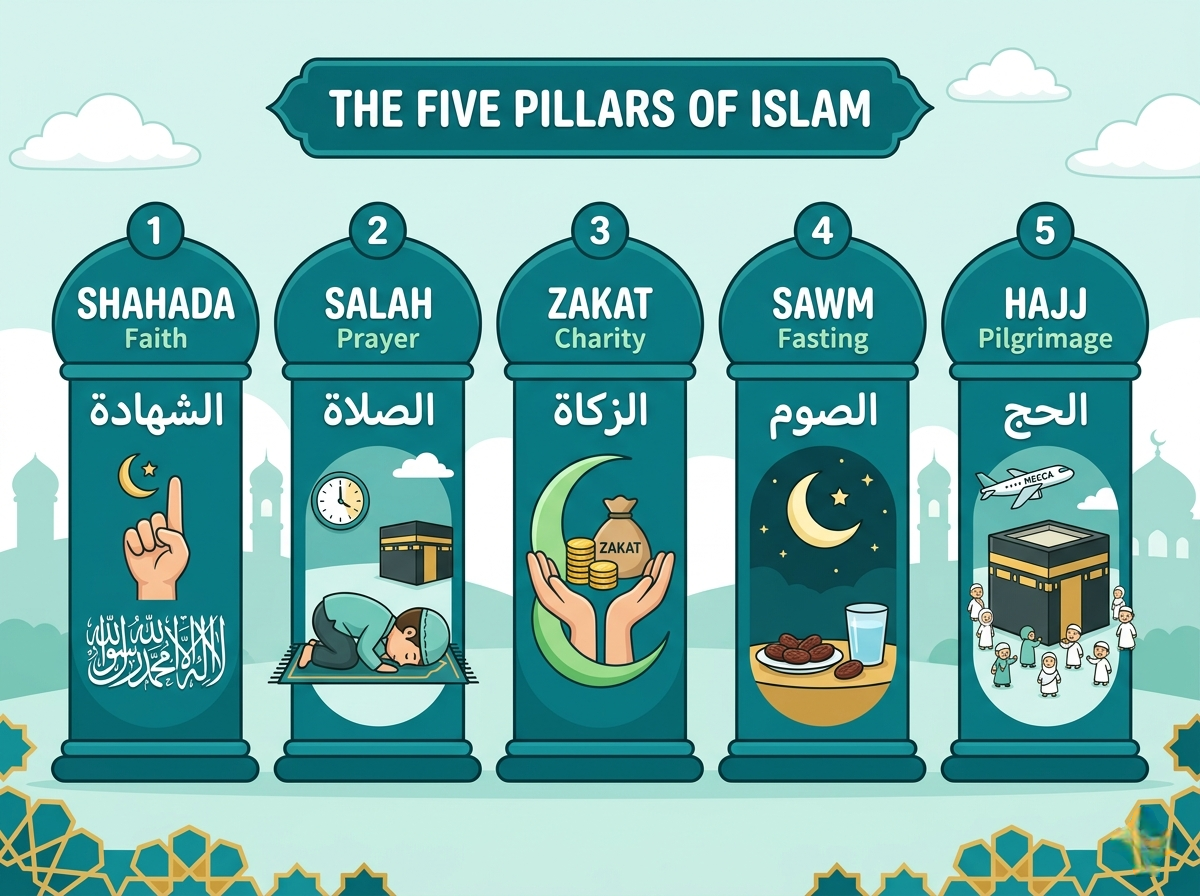
The Five Pillars of Islam are the basic acts of worship that every Muslim is expected to follow. They include:
Shahadah (Faith)
Salah (Prayer)
Zakat (Charity)
Sawm (Fasting in Ramadan)
Hajj (Pilgrimage to Makkah)
These pillars create a strong spiritual framework for Muslims and help build a balanced and righteous society.
1. Shahadah – Declaration of Faith
The first pillar of Islam is Shahadah, the declaration of faith. It states:
“There is no god but Allah, and Muhammad (peace be upon him) is the Messenger of Allah.”
This simple yet powerful statement is the foundation of Islamic belief. By sincerely reciting the Shahadah, a person enters Islam and accepts the oneness of Allah and the prophethood of Prophet Muhammad (PBUH).
Importance of Shahadah
Strengthens belief in one God
Creates spiritual purpose in life
Encourages obedience to Allah
Unites Muslims worldwide under one faith
Shahadah reminds Muslims that their ultimate goal is to worship Allah and live according to His guidance.
2. Salah – Daily Prayer
Salah is the second pillar of Islam and refers to the five daily prayers performed by Muslims. These prayers are offered at specific times throughout the day:
Fajr – Before sunrise
Dhuhr – Afternoon
Asr – Late afternoon
Maghrib – After sunset
Isha – Night prayer
Prayer is a direct connection between a Muslim and Allah. Muslims face the Kaaba in Makkah while praying, symbolizing unity among believers.
Benefits of Salah
Builds discipline and time management
Brings peace and spiritual comfort
Strengthens connection with Allah
Encourages cleanliness and mindfulness
Regular prayer helps Muslims stay focused on faith despite the distractions of modern life.
3. Zakat – Charity and Helping the Poor
Zakat is the third pillar of Islam and means giving a portion of wealth to those in need. Muslims who are financially able must donate a fixed percentage of their savings, usually 2.5%, to support the poor and needy.
Zakat is not just charity; it is an obligation that promotes social justice and compassion.
Importance of Zakat
Reduces poverty and inequality
Purifies wealth and the soul
Encourages generosity
Strengthens community bonds
Islam teaches that wealth is a blessing from Allah, and sharing it with others brings blessings and rewards.
4. Sawm – Fasting During Ramadan
The fourth pillar of Islam is Sawm, or fasting during the holy month of Ramadan. Muslims abstain from food, drink, and sinful behavior from dawn until sunset.
Ramadan is a sacred month that teaches self-control, patience, gratitude, and empathy for the less fortunate.
Spiritual Benefits of Fasting
Develops self-discipline
Strengthens faith and devotion
Encourages gratitude
Helps Muslims understand the struggles of the poor
Fasting is not only physical but also spiritual. Muslims are encouraged to increase prayers, read the Quran, and perform good deeds during Ramadan.
5. Hajj – Pilgrimage to Makkah
Hajj is the fifth pillar of Islam and refers to the pilgrimage to Makkah in Saudi Arabia. Every Muslim who is physically and financially able must perform Hajj at least once in their lifetime.
During Hajj, millions of Muslims from different countries gather together in worship, wearing simple white clothing to symbolize equality and unity.
Importance of Hajj
Demonstrates submission to Allah
Promotes unity among Muslims
Teaches patience and humility
Strengthens spiritual renewal
Hajj is one of the largest religious gatherings in the world and reflects the universal brotherhood of Islam.
Why Are the Five Pillars of Islam Important?
The Five Pillars of Islam are essential because they shape a Muslim’s character and relationship with Allah. These pillars provide guidance for personal behavior, family life, and social responsibilities.

Leave Your Comments